Generative Sol

 For #genuary2022 day 7, we took the #generative mission to heart and used the @OpenAI API to GPT-3 to algorithmically generate *new* drawing instructions in the style of Sol Lewitt, which we then attempted to draw. Thread on our process  #creativecoding #p5js #genuary 1/


First, we grabbed the raw text of a bunch of Sol Lewitt drawing instructions from the “Solving Sol” GitHub repo (https://github.com/wholepixel/solving-sol). That landed us with 44 example instructions. 2/ 


Next, we fed these examples to the “completions” endpoint of the OpenAI API (https://beta.openai.com/docs/guides/completion). The completion endpoint is perfect for this task, as it’s able to take in a number of examples and generate more in the same style. 


At the end of our list of sample instructions, we prompted the model for a new “## Wall Drawing #” , and left it up to the model to choose a number, year and instructions. 


The model generates all sorts of instructions. Some are nonsense, or near-duplicates of existing Lewitt. But most are perfectly coherent. A few curated examples which we rendered in #p5js and Illustrator: 


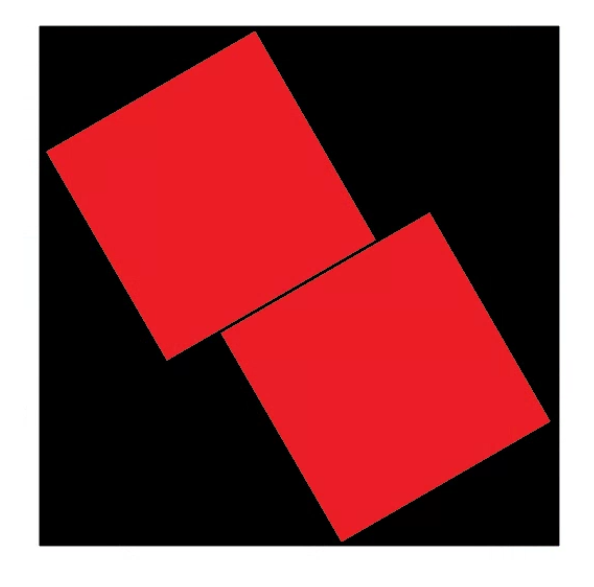
Wall Drawing #945 (2001). Two red squares meeting at right angles within a black square.
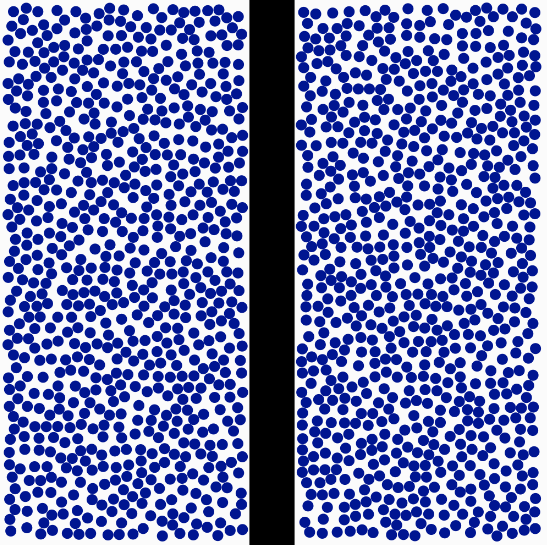
Wall Drawing #943 (2001). Blue dots 1/4 inch (6 mm) in diameter in two columns separated by a black 1-inch (25 mm) wide band. The dots are placed as close together as possible in order to cover the wall. 

Wall Drawing #903 (1999). A wall divided horizontally and vertically into two equal parts. Top: a white square within which are white horizontal parallel lines, and a white rectangle within which are white vertical parallel lines. Bottom: a white square within which are white horizontal parallel lines and a white rectangle within which are white vertical parallel lines.


Wall Drawing #606 (1989). Ten pencils, ten colors. 10,000 pencil marks on a 40 x 40 inch (100 x 100 cm) square of black paper.


A few of the model outputs are quite funny if not very true to Lewitt. For example, the model’s “Wall Drawing #658 (1989)” calls for “Lines in three directions and two colors, in the style of Piet Mondrian.”

Others create contradictions but are almost interpretable; aside from drawing a “vertical band parallel to the horizontal axis” Wall Drawing #481 is nearly viable:
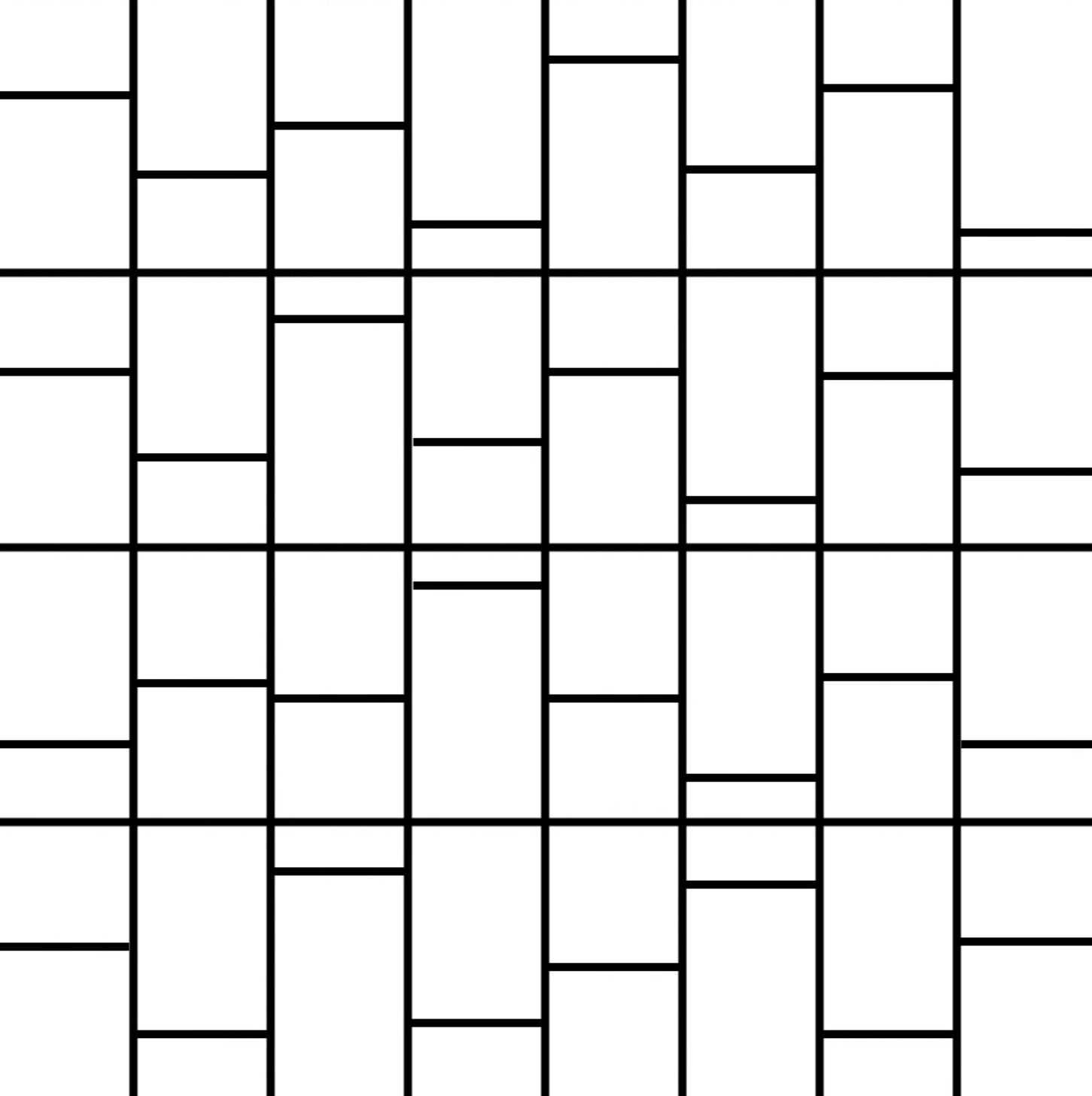


Wall Drawing #481 (1986). A vertical band parallel to the horizontal axis dividing the wall into two equal parts. Within each part, a band parallel to the vertical axis dividing the wall into two equal parts. Within each of those two parts, a band parallel to the horizontal axis dividing the wall into two equal parts. Within each of those two parts, a band parallel to the vertical axis dividing the wall into two equal parts. Within the innermost part, a band parallel to the horizontal axis.


Wera Tool Check PLUS adjustment

This is our follow up to a previous post; a plOtbOt optimisation of sorts, focusing on organization. We have a toolbox that sits near pl0tb0t and holds a variety of spare parts and utensils.

Generally it sits and collects dust acts as a second point of contact for go-to tools for the machine, outside of our primary tool's normal home: knolled around the borders of pl0tb0t's spoilboard.

The toolbox has held extra tools like a small driver set:

as well as some files and wrenches... and a handful of XCarve items like holddown clamps and older Arduino CNC shields:


 It has also held all sorts of pen fodder until recently.. With the new pen rig the box has lost some substantial view count, and it subsequently is going to be relagated to the hall 🥵!! 

The main hope today was to pull any last hot tool for the machine from the box if possible.. and after some thought, I felt with some modification the Wera toolcheck plus might be more usable than it's default config. It came with like... Torx security bits.. and a mess full of driver bits that wouldn't be helpful on pl0tb0t. Luckily in storage we have a sloppy supply if other options so it's time for adjustments!!

It may not look like much but added in is 7 subdivisions of the preexisting bit types.. 32nd Allen drivers, flats small enough for electrical headers.. long term it might be worth seeking out metric Allens which could eliminate the other remaining set of desk wrenches... They would likely replace the square drivers, which seem to be mostly for construction? 

All the options to go through are pictured below:

A comic collection, but luckily all back in their  storage box.

An organizational WIP.. but a proud release for now.

Documentation: a ramble

Some side work. Been meaning to begin any sort of streaming documentation outside of Instagram.. painful stuff over there. Draws a lot of patience. Working through the chores of good work is always a bit of a spiral. 

For today the best of it comes to a bag. 


It was a quick buy after having some Posca pens arrive to realize their home would likely be like... a toolbox half full of pen-related debris. The toolbox isn't gone yet.. and still holds a half set of simple drivers as well as some spare parts.. but for now.. pens. 

It turned into these layouts:


Second layout is silly, holding a pl0tb0t specific set of pilot G-2s removed from their sleeves to be held in a spring-loaded mount as pl0tb0t's current universal gripper isn't springloaded.. hopefully, iteration 2 comes soon enough? We're in planning and parting.. but that's issue (post, not problem) for another time! 


Nest_Egg

This was a bit of a journey. Far and away pl0tb0t's longest drawing. 4, 3 hour layers, nearing cmyk stippled imagery. Things missing from this build were balancing the color layers as well as there was no consideration for rosette configurations for smoothing color differences. 

Each layer has 6000, equally weighted points. There is a setting to control point weights as well but for this drawing all are equal. 

Results were mildly muddy and green was missed heavily, considering the source image. Also the speckles on the eggs didn't catch. On the upside, the nest had pieces of straw and grass shoe up texturally, and the eggs read.
final product

first layer

digital layer

Alpha layer - cyan 

Blue Lines + Future Coral

In March 2022, we were fortunate to be participating artists in Data Through Design (DxD) 2022 exhibit , titled “Ground Truth IRL” at The Ha...